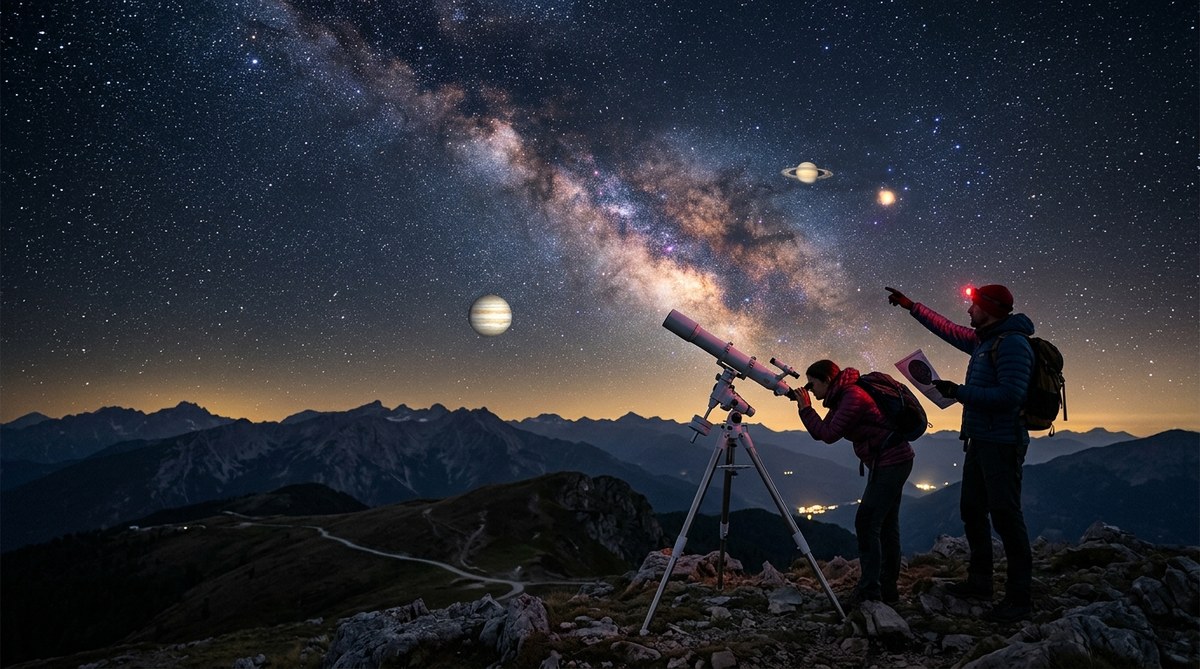
Step outside and the night sky immediately starts telling a story. The best time to observe planets and stars is less about chasing a single moment and more about catching the right window for what you want to see. Whether you are new to astronomy or an seasoned backyard stargazer, timing your observations can make the difference between a faint glow and a dramatic sight. In this guide from AstroBuyAndSell.co.uk we walk you through the science of timing, practical planning tips, and simple routines that help you maximize every clear night.
The celestial clock and observation windows
Astronomy is a hobby of patience and preparation. The sky changes as the Sun sinks and the Earth turns, so a little planning goes a long way. Understanding the different twilight phases helps you choose the right window for your targets.
Twilight basics you should know
- Civil twilight occurs when the Sun is up to 6 degrees below the horizon. There is still some light in the sky, which can wash out faint stars but keeps the brighter planets visible after sunset or before sunrise.
- Nautical twilight is when the Sun is between 6 and 12 degrees below the horizon. The sky grows darker and fainter stars appear, making planets and brighter deep sky objects easier to see with your eyes or a small telescope.
- The astronomical twilight is when the Sun is between 12 and 18 degrees below the horizon. After this phase, the sky becomes truly dark and faint objects reveal themselves to very good observers.
- Night time begins after astronomical twilight ends and ends with the morning twilight before sunrise. This is often the best window for deep sky observing and for catching fainter planets and star clusters.
Best windows for planets versus stars
- Planets that orbit closer to the Sun, such as Mercury and Venus, are seen best near sunrise or sunset when they are at greatest elongations. They ride close to the Sun in the sky, so you catch them during dawn or dusk while the Sun is just below the horizon.
- Outer planets like Jupiter, Saturn, Uranus, and Neptune come into their own when they are opposite the Sun. That is when they rise in the evening, climb high through the night, and set near dawn. This is your best chance to see their disks and distinct features with a modest telescope.
- Stars shine best in dark skies away from city lights. A new moon or crescent moon evening is often ideal because the sky remains dark enough, while the Moon itself can be a wonderful sight when you want to track its phases.
- The Moon itself is a powerful guide. If you want to see faint galaxies or nebulae, plan around the new Moon phase. If you want dramatic lunar features, a first or third quarter Moon provides good shadows along crater rims.
Practical planning rule of thumb
- If you want to observe a bright planet like Venus or Jupiter, check the sky after twilight ends and again in the pre-dawn hours. For faint planets like Uranus or Neptune, wait for a dark sky well after astronomical twilight and stay up longer if possible.
- For star rich observing, pick nights with no Moon or a very thin crescent and watch during the late evening into the early hours when the sky is most settled.
Planets at a glance: when to look and why
Understanding the general behavior of planets helps you decide when to point your telescope or binoculars.
Inner planets Mercury and Venus
- Mercury: The trickiest planet to catch because it stays close to the Sun. Look for Mercury during twilight near sunrise in the morning sky or near sunset in the evening sky, when elongation is favorable. It is easy to miss if the horizon is smeared with light or clouds.
- Venus: The brightest planet by a wide margin. It is visible as the Evening Star in many parts of the year after sunset or as the Morning Star before sunrise when it is on the other elongation. Venus consistently shines through the twilight sky and offers a spectacular object even in binoculars.
Outer planets Jupiter and Saturn
- Jupiter: A spectacular target when high in the sky after dusk. It shines brilliantly and shows bands and moons with relatively modest equipment. The best viewing is when Jupiter is high and the sky is dark enough for good contrast.
- Saturn: Renowned for its rings, Saturn is equally rewarding when it is well above the horizon with a good telescope. Watch for its ring tilt changing slightly over months; a small scope can reveal the rings and Titan.
Distant worlds: Uranus and Neptune
- Uranus and Neptune require dark skies and dark planet sensors to separate them from faint background stars. A good telescope and a dark site are the keys. Star hopping with a chart is essential because they are faint and can be mistaken for small stars.
A quick planner for planets
- When you want bright planets, plan for civil or nautical twilight in the evening or morning. Venus and Jupiter are often your easiest targets during these windows.
- For fainter planets, aim for astronomical twilight or the darkest part of the night to maximize contrast.
Stars and deep sky objects: when they shine brightest
- The best times to observe stars and deep sky objects are when the sky is truly dark. A new Moon provides the darkest sky, which helps with star clusters, nebulae, and galaxies.
- Constellations and asterisms are easy to spot when you know the sky map. The Milky Way is a rewarding target in dark skies, especially away from city lights.
- Seasonal weather patterns can alter what you see. Clear, dry nights with steady air give the best seeing and the sharpest views.
How to plan a night of observing like a pro
A little preparation makes a big difference. Here is a practical checklist you can use on any clear night.
Step by step night planning checklist
- Check the forecast and sky conditions for transparency and wind. Favor nights with low humidity and calm air for steady seeing.
- Decide on your targets. If you want planets, pick Jupiter or Venus for a bright evening target, or Uranus and Neptune for a dark sky challenge.
- Determine the best observing window. If you plan to catch a specific conjunction or Moon proximity to a planet, time your session accordingly.
- Prepare your equipment. Align your finderscope, calibrate your eyepieces, and ensure your mount is balanced for smooth tracking.
- Calibrate your planisphere or star chart to the date and your location. This helps you locate bright stars and the path of planets along the ecliptic.
- Start with easy targets. Begin with bright planets, then move to star clusters or the Milky Way if the sky is dark enough.
- Record your observations. Keep a simple log of what you saw, the time, and the equipment used. It makes future planning easier.
Observing windows by target type
- Planets: target bright planets in the early evening or pre-dawn hours depending on elongation, or around opposition for outer planets.
- Stars and clusters: aim for the darkest time of night, especially near the Moon phase you prefer.
- Deep sky objects: require dark skies and clear transparency. Plan your night around a new Moon or a Moonless period.
Tools that make planning easier
- Star charts and planispheres help you quickly identify where to look as the sky moves.
- Smartphone apps such as Stellarium, SkySafari, and Star Walk provide real time sky views and notifications.
- Observing journals and community logs help you track what you saw and compare with others.
Seasonal and monthly planning: general guidelines you can rely on
The exact timing of when planets are best seen depends on your hemisphere and the year. The following are broad patterns you can depend on for planning.
Spring evenings and early summer
- Venus often shines in the western sky after sunset.
- Jupiter can be a prominent evening sight, high after dusk.
- Saturn may appear later in the night in many locations, offering a spectacular ring view with the right telescope.
- Uranus and Neptune are best observed in dark skies, typically late at night.
Summer nights
- Venus remains a bright beacon in the twilight, and Jupiter remains visible in the evening sky in many places.
- Saturn is a late night or early morning target as it climbs higher.
- Deep sky observing is especially rewarding when the humidity drops and skies stay clear.
Autumn nights
- Mars begins to reappear in the morning sky around some years when it is near its opposition. It can provide a dramatic red glow when conditions permit.
- Jupiter and Saturn can still be seen early in the night or late in the evening depending on your latitude.
- The Milky Way remains visible from truly dark sites as the nights grow longer.
Winter nights
- The longer nights give generous opportunities to observe faint stars and deep sky objects.
- The Moon and planets can form striking pairs, making for easy catch up viewing with simple equipment.
- Orion, Taurus, and Cassiopeia offer classic winter targets for beginners and seasoned observers alike.
Equipment and observing tips for different skill levels
Whether you own a compact pair of binoculars or a high end telescope, there are ways to optimize every session.
For beginners: binoculars and easy targets
- Start with bright planets like Venus and Jupiter. They are easy to spot and provide immediate satisfaction.
- Use a star map or app to locate major constellations and bright clusters. This builds confidence.
- A stable tripod and a simple red flashlight help you see without ruining your night vision.
For intermediate observers: small telescopes and star clusters
- A small refractor or reflector can reveal Saturn rings, Jupiter cloud bands, and bright nebulae.
- Try observing the Orion Nebula, the Pleiades, and the Beehive Cluster. These objects are rewarding and accessible with mid range gear.
For advanced observers: deep sky and planetary imaging
- A telescope with precise tracking and good optics helps you capture faint galaxies and dwarf planets.
- Imaging with a camera requires careful exposure control and post processing. Start with simple bright targets and move up to more complex ones.
Tips for special observing events
- Conjunctions, oppositions, and eclipses provide dramatic opportunities. Plan ahead to catch these events when they occur.
- Meteor showers offer a different kind of observing challenge. They require a wide field of view and patience during the peak.
- Variable stars and asterisms add variety to regular observing sessions, and are great for practicing consistent observation.
Night sky etiquette and site selection
- Choose a dark site away from city glow. If you cannot travel far, go to a park or higher ground away from streetlights.
- Allow your eyes to adapt to dark conditions for 15 to 20 minutes. This improves your ability to see faint objects.
- Bring warm clothing and a chair. Observing is a long game, and comfort matters to stay focused.
Making the most of your night and learning faster
- Keep a simple observing log. Note time, location, sky conditions, target, and equipment.
- Compare notes with friends or online astronomy communities. Sharing observations helps you learn faster.
- Revisit targets you have seen before to notice changes and improve your technique.
How AstroBuyAndSell supports your night sky journey
AstroBuyAndSell.co.uk is your go to resource for telescope guides, observing tips, and space news. We cover beginner guides to Dobsonian telescopes, constellation mythology, best times to observe planets, online astronomy communities, and more. Use our resources to sharpen your timing and your equipment choices. We also feature practical buying guides for telescopes and accessories so you can build the perfect setup for your observing goals.
Quick reference cheat sheet: maximize your observing time
- Know your twilight phases and plan accordingly.
- Start with bright planets before moving to fainter targets.
- Use a star chart to track the ecliptic and the position of the planets across the sky.
- Choose nights with little Moon light when you want to see faint objects.
- Use a stable setup and give your eyes time to adapt.
- Record what you see and compare across sessions.
A night time planning sample session
- Target: Jupiter and the Moon pairing in a clear sky.
- Time window: after astronomical twilight ends and before moonrise.
- Equipment: small telescope or binoculars, a star chart, and a comfortable chair.
- Steps: observe Jupiter first, note cloud bands and Moon proximity, then switch to a star cluster or nebula if conditions permit.
- Log: write time, date, visibility, equipment, and any notable features.
Conclusion: your best time to observe is the time you make
The night sky rewards planning and patience. The best time to observe planets and stars is the time when your target is high enough in a dark sky with minimal interference from the Moon, light pollution, and weather. By understanding twilight, planetary motion, and the seasonal pattern of targets, you can craft a satisfying observing session almost any clear night. Whether you are a curious beginner or an experienced stargazer, small steps in planning yield big returns in the night sky.
If you enjoyed this guide, consider joining our community on AstroBuyAndSell.co.uk. We share practical observing tips, telescope recommendations, astrophotography techniques, and space news. Stay connected with updates on the best times to observe planets, tips for night sky tracking, and new gear guides to help you get the most from your observing sessions. Happy stargazing from the team at AstroBuyAndSell.